

24 September 2026 | New Delhi
Urgent Appeal: India Must Immediately Halt Further Evictions and Prevent Homelessness Among Rohingya Refugees in Jammu
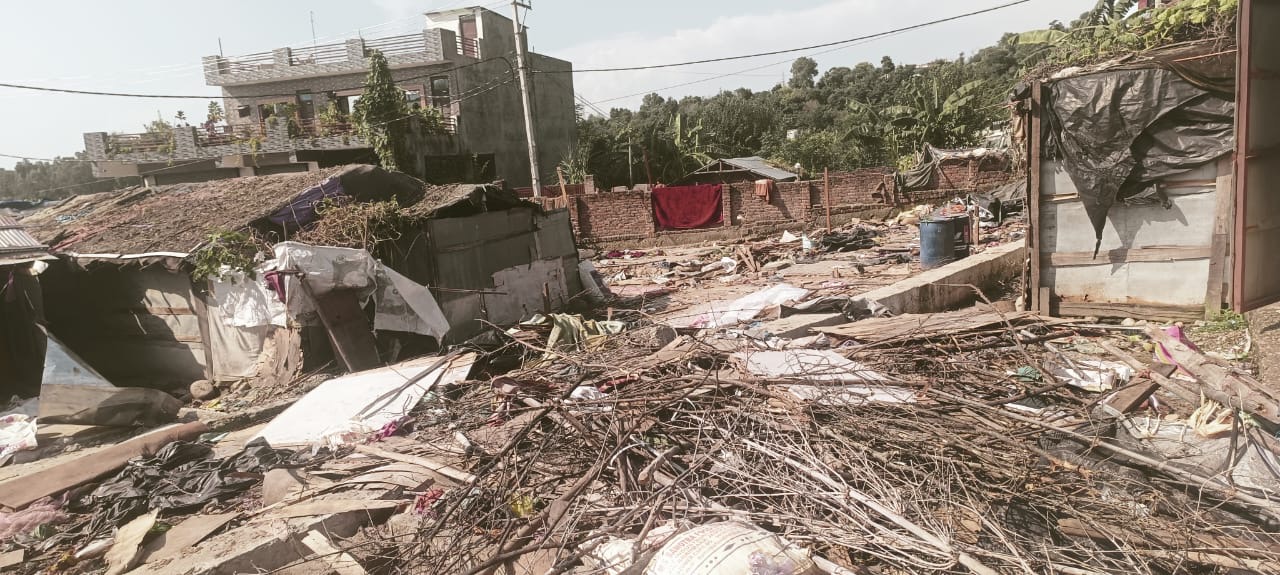
Approximately 350 shelters belonging to Rohingya refugee families have already been cleared or dismantled across five settlements in Jammu, affecting nearly 1,800 Rohingya refugees, including children, pregnant women and older persons. The evictions have followed a notice dated 28 August 2026 issued by the District Collector, Jammu. In addition, Rohingya settlements, including smaller settlements and camps in Jammu, have reportedly received eviction notices, placing many more families at immediate risk of displacement. To date, the affected refugees have not been provided with safe, adequate and sustainable alternative accommodation, and according to information received, displaced families are being compelled to live on the streets without access to cooking facilities, toilets or safe drinking water.
The Rohingya Human Rights Initiative (R4R) expresses grave concern over these developments and urgently appeals to the Government of India, the Government of the Union Territory of Jammu and Kashmir, the District Administration of Jammu, and the Office of the United Nations High Commissioner for Refugees (UNHCR) in India to intervene immediately to halt further evictions, prevent further homelessness and ensure emergency assistance for families already displaced. We request a written response to this appeal by 29 September 2026.
This is now an urgent humanitarian and protection situation. Delay will mean more families without shelter and fewer options for preventing irreversible harm.
 Photo credits: R4R ground volunteer on 18,September 2026
Refugees are being required to dismantle their own shelters, with no alternative accommodation in place.
Rohingya refugees in Jammu are being required to pull down their own shelters and remove whatever they can carry. Many of these shelters were built over years through daily wage labour, informal work and small personal savings. According to community members, the minimum cost of each shelter is INR 50,000. For families living on the edge of subsistence, this is not a recoverable financial loss; it represents nearly everything they were able to rebuild after fleeing Myanmar.
At present, there appears to be no safe and viable relocation plan for the displaced families. Some are considering moving to other parts of India in the hope of finding shelter and work. Community members report, however, that Rohingya refugees have also encountered restrictions and pressure in other locations. Moving from one city to another without secure accommodation, lawful access to livelihood and continuity of essential services would not end their displacement; it would transfer the crisis elsewhere.
The consequences extend beyond the immediate loss of a roof. Repeated movement disrupts children’s education, severs access to work, medicine, water and sanitation, and exposes women, children, older persons and persons with illness or disability to heightened risks of exploitation, illness and violence. Once a shelter is removed without a planned alternative, vulnerability deepens with each passing day.
Testimonies received by R4R illustrate the human impact of the evictions.
One refugee, who requested anonymity for security reasons, told R4R that he had received an eviction notice requiring him to vacate his shelter within four to five days. He arrived in Jammu in 2014 and is now facing eviction with his nine family members, without knowing where they can go. Two members of his family have been detained at the Hiranagar detention centre since 2021, and he said that he cannot imagine leaving Jammu while they remain there. His testimony highlights not only the immediate risk of homelessness but also the difficult choices faced by families already separated through detention.
Another refugee told R4R that he lost everything as a result of a single eviction notice after spending years building a life in Jammu. He said that he has nowhere else to go and cannot return to Myanmar because he fears that he and his family would be killed if they were forced to return.
The evictions compound the insecurity created by prolonged detention.
The eviction crisis cannot be viewed in isolation from the broader insecurity experienced by the community. Prolonged detention of approximately 280 Rohingya refugees, together with the destruction of homes and the threat of further evictions, has created a pervasive sense that no aspect of community life is secure. Families fear separation, loss of livelihood, interruption of schooling and the possibility that they may be left without any place where they can lawfully and safely remain.
Evictions must comply with constitutional and international human rights standards.
The legal or administrative status of a person cannot erase the obligation to protect life and human dignity. Article 21 of the Constitution of India protects every person, not only citizens, and Indian constitutional jurisprudence has repeatedly recognised the central relationship between life, dignity and shelter. International human rights standards likewise require that evictions be preceded by genuine consultation, adequate notice, access to remedies and measures to prevent homelessness. Where children are affected, their best interests, safety, health and continuity of education must be treated as primary considerations.
These safeguards do not determine questions of ownership or confer an unrestricted right to occupy any particular parcel of land. They do require, however, that enforcement action be lawful, proportionate and humane, and that it does not abandon vulnerable families to the street. Any unavoidable relocation must occur only through a transparent process and to a place where families can live in safety and dignity.
CALLS TO ACTION:
We call on the Government of India, the Government of the Union Territory of Jammu and Kashmir and the District Administration of Jammu to:
1. Suspend further evictions. Immediately pause all further eviction and demolition action affecting Rohingya settlements, including action under the 28 August 2026 notice, until an independent protection and humanitarian assessment has been completed and affected families have been meaningfully consulted.
2. Prevent coerced self-demolition. Ensure that no refugee is compelled, pressured or threatened into dismantling a shelter without written notice, a lawful process, an opportunity to seek review and a safe relocation arrangement.
3. Provide emergency and alternative accommodation. Arrange safe, dignified and accessible shelter for every displaced family. No child, woman, older person or other vulnerable individual should be left without a roof while administrative questions are being considered.
4. Deliver immediate humanitarian assistance. Provide food, potable water, sanitation, healthcare, essential medicines, protection services and continuity of education to all affected households, including those already displaced.
5. Enable independent monitoring. Permit UNHCR, child protection bodies, legal aid institutions and independent humanitarian organisations to meet affected families and document the evictions, destruction of shelters and resulting protection needs.
6. Review prolonged detention. Urgently review the continued detention of the approximately 280 Rohingya refugees reportedly held in Jammu since 2021, with effective access to legal assistance, family contact, healthcare and UNHCR.
We call on UNHCR in India to:
1. Respond to the appeals already made. Respond urgently to the appeals submitted by affected refugees and meet affected families in Jammu to assess their protection and humanitarian needs.
2. Engage the relevant authorities. Exercise its protection mandate by engaging directly with the relevant authorities to halt further evictions and secure emergency assistance and alternative accommodation for families already displaced.
Sincerely,
Rohingya Human Rights Initiative (R4R)
Email: info@rohringya.org
Website: www.rohringya.org